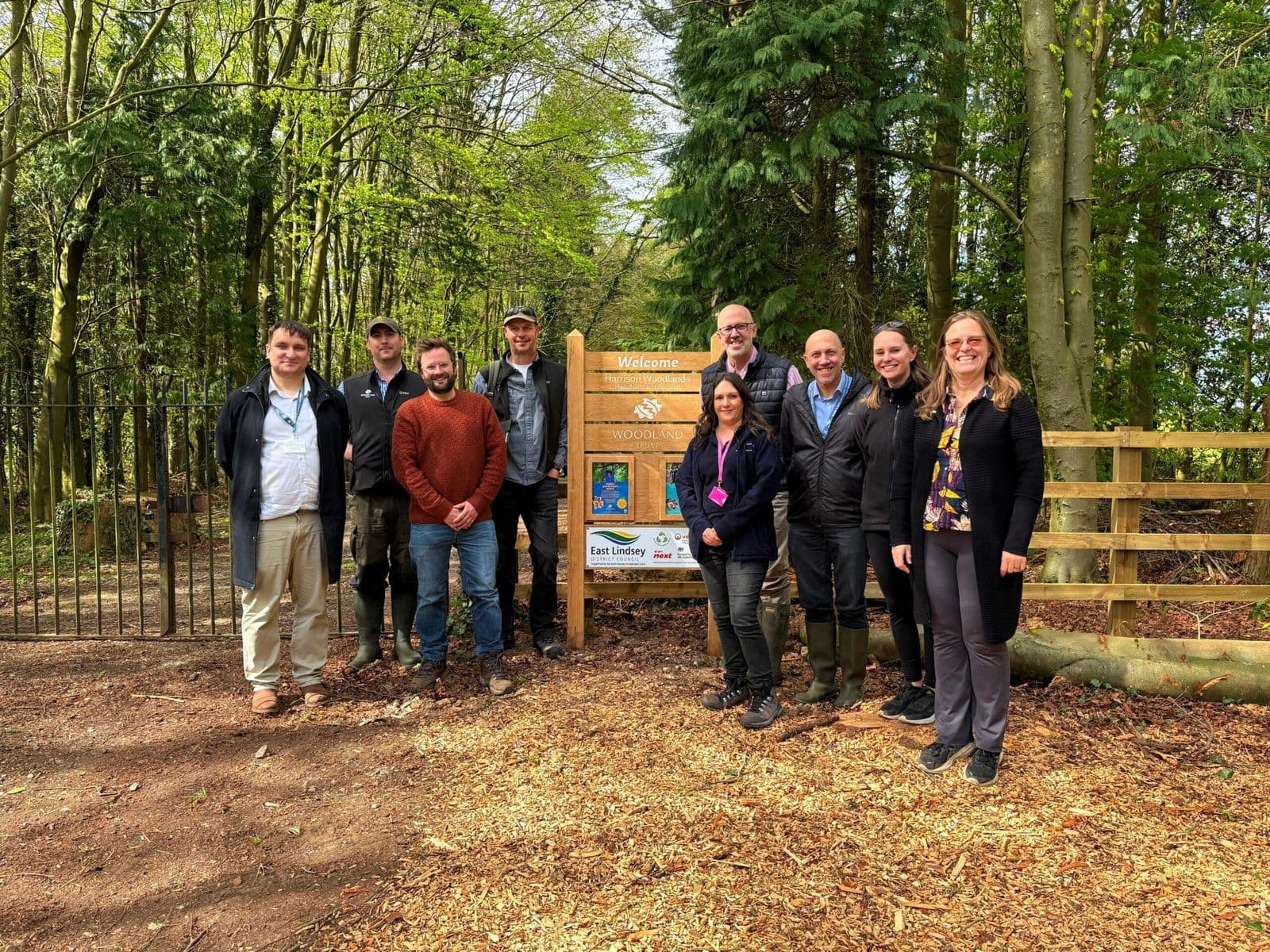
The preservation of an historic woodland on the Lincolnshire Wolds has been made possible thanks to funding from East Lindsey District Council.
The site, Harrison Woodlands near Louth, has been purchased by the Woodland Trust and is now open to residents and visitors to the district.
This has been achieved through a major investment of £1m through the East Lindsey Investment Fund, provided through the council’s own funds, and further support (£0.18m) from the UK Shared Prosperity Fund. In addition, the Woodland Trust received contributions from other funders and ran a very successful public appeal which raised over £1m towards the purchase of the site.
Harrison Woodlands is a 482 acre ancient woodland, mentioned in the Domesday Book, and is already home to some wonderful wildlife, including regionally-rare white admiral butterflies and one of only four known pairs of nesting ravens in the county.
In recent times the woodland has been managed for commercial timber, but the Woodland Trust is now starting to implement a significant programme of restoration. This will involve the removal of non-native conifers to allow the return of native tree species and their associated wildlife.
The grants from the council were agreed with condition that the site is to be conserved and made accessible for the long-term use and enjoyment of East Lindsey’s residents.
Ancient woodland is an integral part of the Lincolnshire Wolds Area of Outstanding Natural Beauty (AONB), a unique landscape of rare beauty within East Lindsey, which attracts thousands of visitors a year.
Councillor Craig Leyland, Leader of East Lindsey District Council, said: “It is absolutely wonderful that East Lindsey District Council has been able to help the Woodland Trust in its pursuit to purchase and preserve this beautiful and historically important site.
“The plan to save the woodland and ensure that residents and visitors can enjoy it for years to come is something we were keen to support through both the East Lindsey Investment Fund and the UK Shared Prosperity Fund.
“Supporting the creation of sensitively developed public, green spaces will not only promote conservation of the district’s natural environment but is integral in supporting the local economy through promoting sustainable tourism.