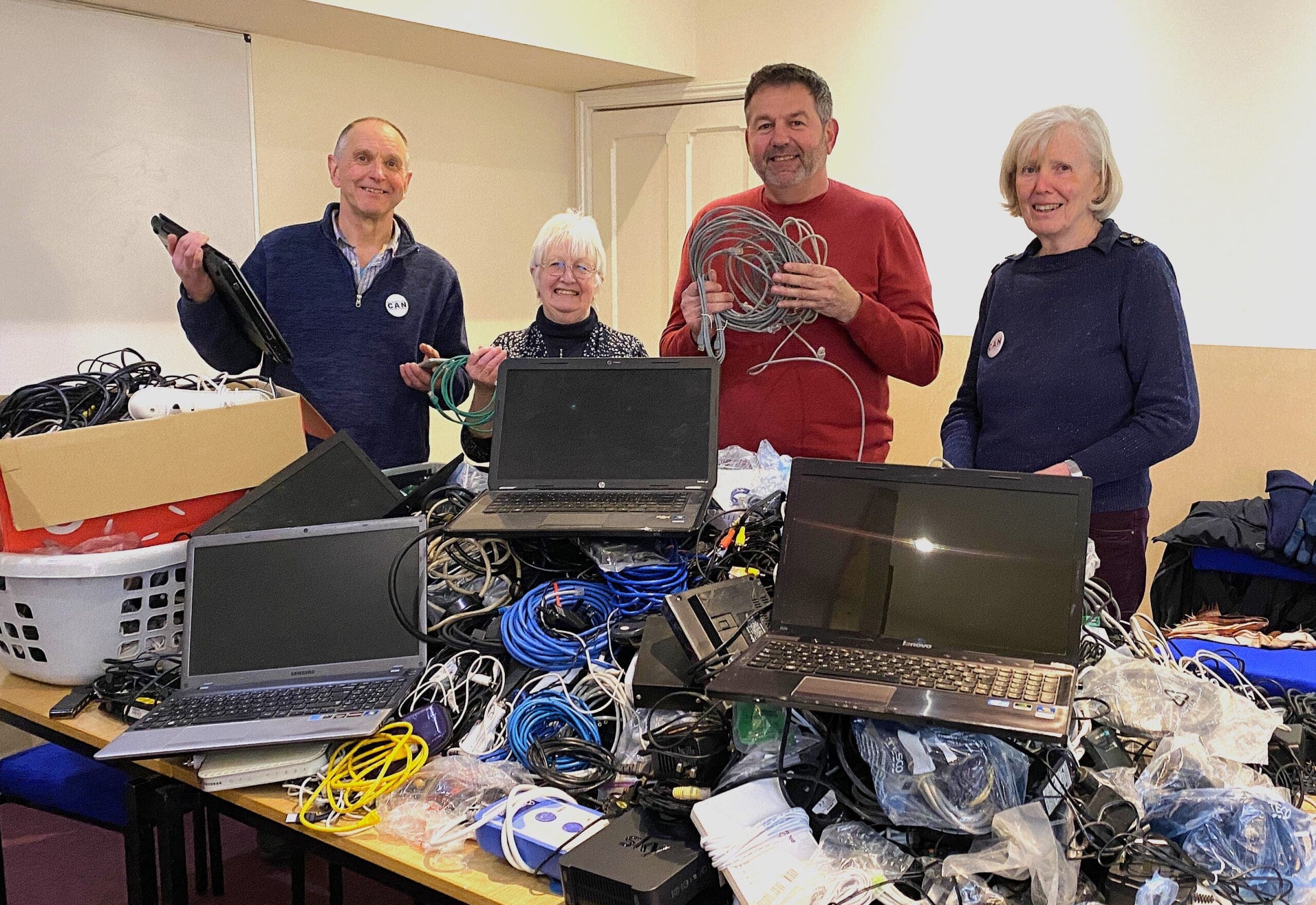
Building on last year’s success, E-Waste Action Week is coming back to North Kesteven with an expanded programme. With two Repair Cafes in the week (in Sleaford and Bracebridge Heath) and drop-off points around the District, the organisers hope to have an even bigger impact.
Sleaford Climate Action Network (SleafordCAN) is again working with North Kesteven District Council to run the Action Week from 16 to 23 May 2026. Through the initiative, North Kesteven residents are encouraged to donate mobile phones, laptops, tablets and cables, which will be refurbished and redistributed to people in need, or recycled securely.
Electronic waste – E-Waste – consists of all those electrical and electronic items we discard, including cables, which millions of us stash in drawers and cupboards. It’s estimated there are up to 880 million unwanted devices and cables in UK homes. These items are packed with useful materials that could be reused, lessening the environmental damage caused by mining raw materials.
Council Leader Cllr Richard Wright said: “The response to the Action Week last year was fantastic, and helping bring devices and resources back into use is making a real difference to the environment. It was incredible to see the huge pile of cables and devices that were brought along – we’re hoping to see just as much participation this year.
“We’re aiming to not only rescue more unwanted devices, but also to learn about why we tend to hoard these items. If we can help people to deal with their waste more effectively and have the confidence to dispose of e-waste responsibly, then we’re really pleased to do so.
“It was really important to us to grow the event beyond the Sleaford area, with more drop-off points and a Repair Café event for the north of the District. So, this is a call-out to people all around NK to dig out their devices and bring them along!”
At the event in 2025, which was focused on Sleaford, 73 laptops, more than 390 phones and tablets, and 220kg of cables were donated. All devices were data-wiped and reset to protect the original user’s information. Older devices such as those on 3G signals or where operating systems could not be updated, were sent to charities in Ghana and Ukraine where the technology is still used, for example in education and training. Any remaining items were securely destroyed and the materials recycled.